Our philosophy
Château Grand-Maison: wines of the terroir, rooted in life, diversity, and nature.
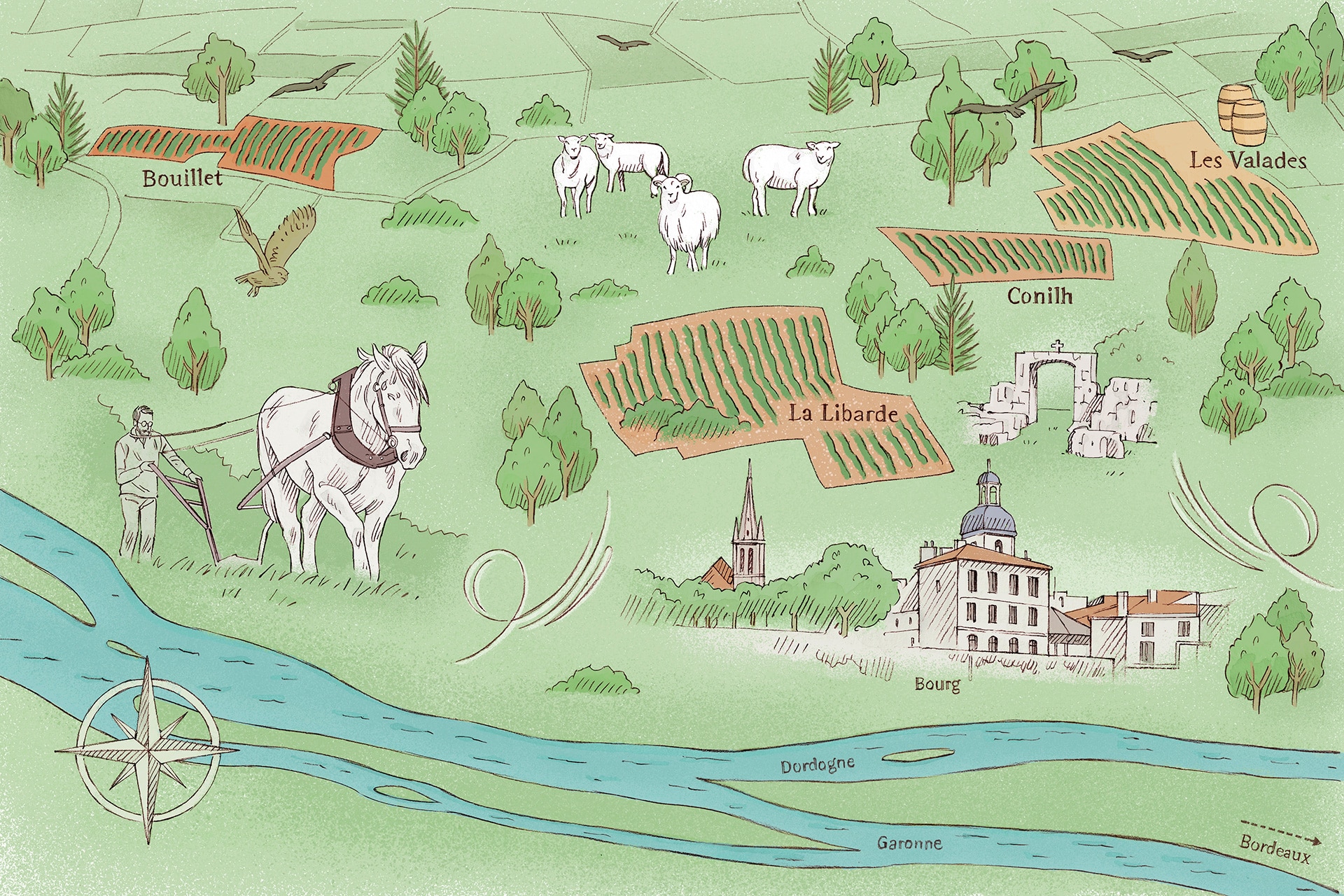
Bouillet
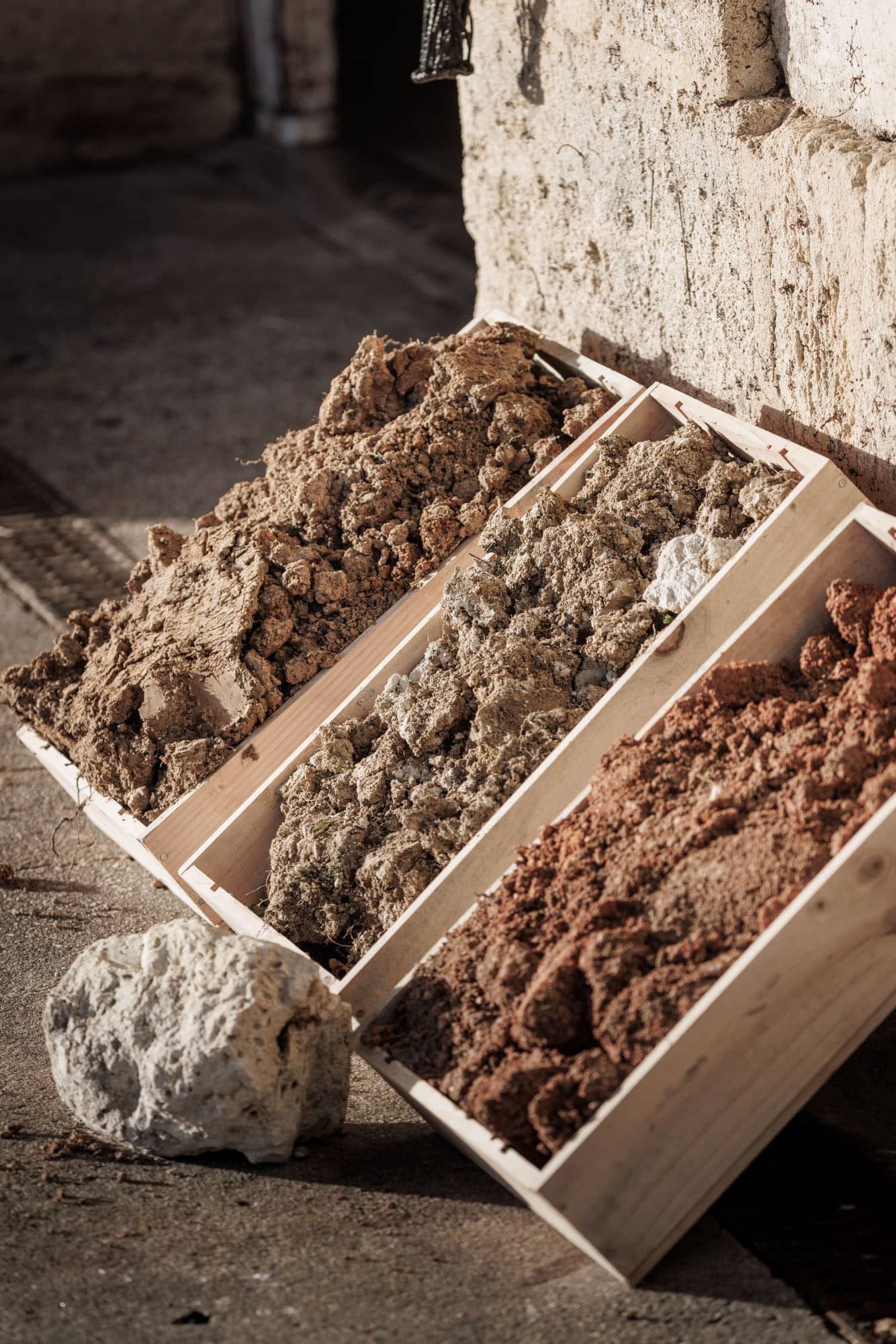
On a hilltop formed during the Pliocene epoch, Bouillet cultivates silty-sandy soils mixed with quartz gravel from ancient gravel deposits. These light red gravels, which warm quickly and are naturally poor, produce straightforward, lively, and precise wines.
La Libarde
Opposite the crypt, this southern hillside forms an amphitheatre set on Eocene carbonate molasses enriched with Oligocene Asteriid limestone. The location produces fine, refined wines, both red and white, enhanced by the freshness of the limestone.
Conilh
On a south-facing hillside overlooking the Dordogne, Conilh is built on Oligocene asteriid limestone and Eocene carbonate molasses deposits. Its structured, well-drained clay-loam soils produce wines of great integrity, combining depth and mineral energy.
Les Valades — version définitive
Perched on a plateau of Quaternary silt, shaped by the wind deposits typical of the Bourgeais peaks, Les Valades, the heart of the estate, rests on silty-sandy soils that evolve into more structured clay-silt horizons. This well-ventilated terroir produces precise wines with a straightforward and consistent structure.
At Pouvaret Vignerons, our commitment goes far beyond simply cultivating vines: we are reviving the great terroirs of Bordeaux, forgotten throughout the 20th century.
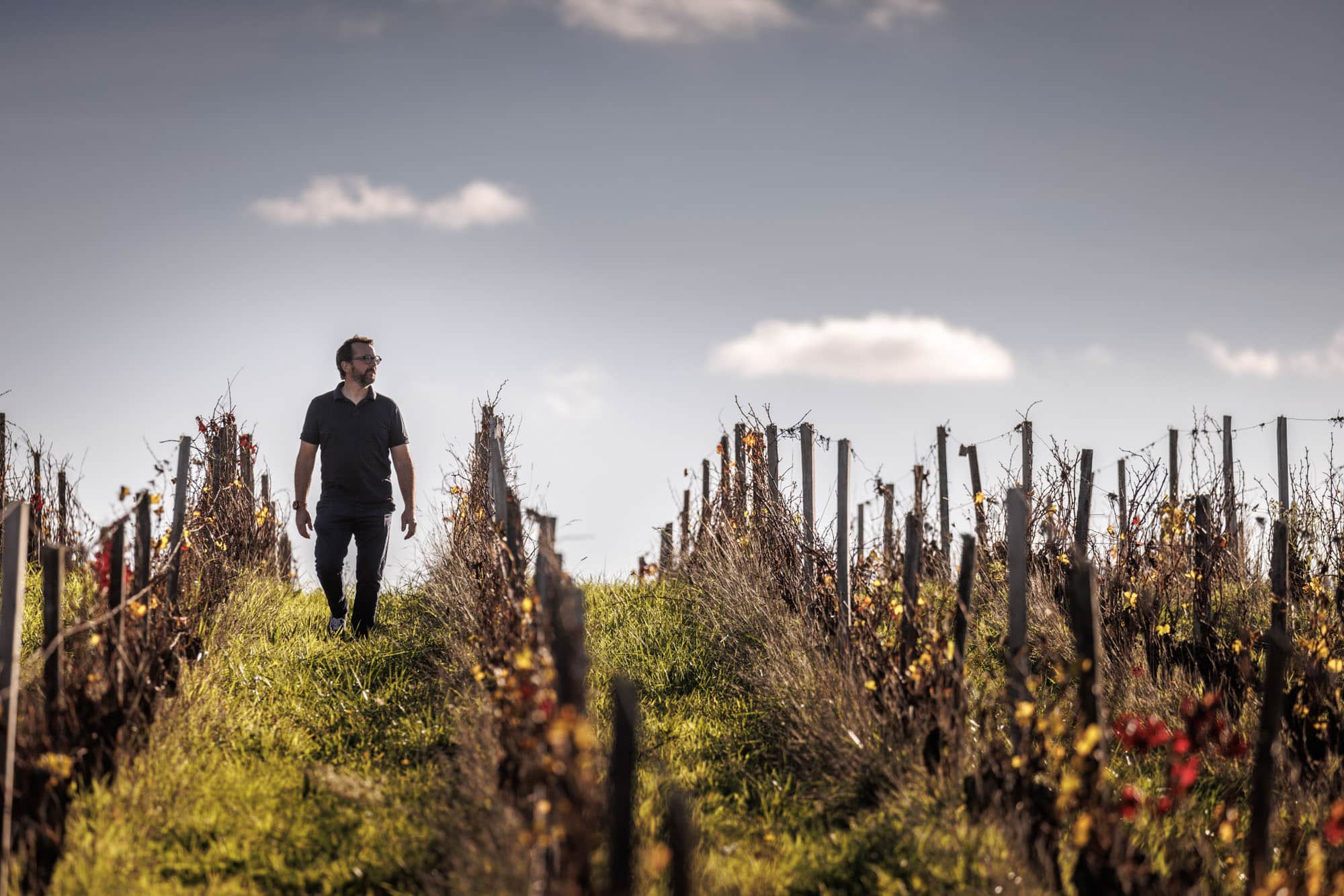
Our philosophy: Cultivating much more than a vineyard, revealing a living entity
Located on the hillsides of Bourg-sur-Gironde, we celebrate a wine-growing heritage rooted in the richness and diversity of micro-terroirs—limestone, clay-limestone, red gravel—and on plots selected for their diversity and potential. Here, there is no monoculture: of the 14 hectares, only 5 hectares are dedicated to vines.
The most important thing for us is to preserve balance, promote biodiversity, and ensure that each
plantation is part of a living ecosystem:
- Hedgerows, copses, and meadows are home to a variety of wildlife, including insects, birds, bats, and small mammals.
- Meadows grazed by our mares and sheep, reflecting our desire to integrate animals to enrich and regenerate the soil.
- Planting fruit trees, creating ecological corridors, sowing cover crops, and managing water intelligently to restore the site’s natural complexity.
- We are convinced that the quality of a great wine stems from this deep connection between the vine and its soil—a living bond, shaped by nature, climate, and our constant attention to detail.
Agroecology,
agroforestry,
actions for the future
Organic farming (certified in 2023) is our foundation, but our commitment goes beyond that:
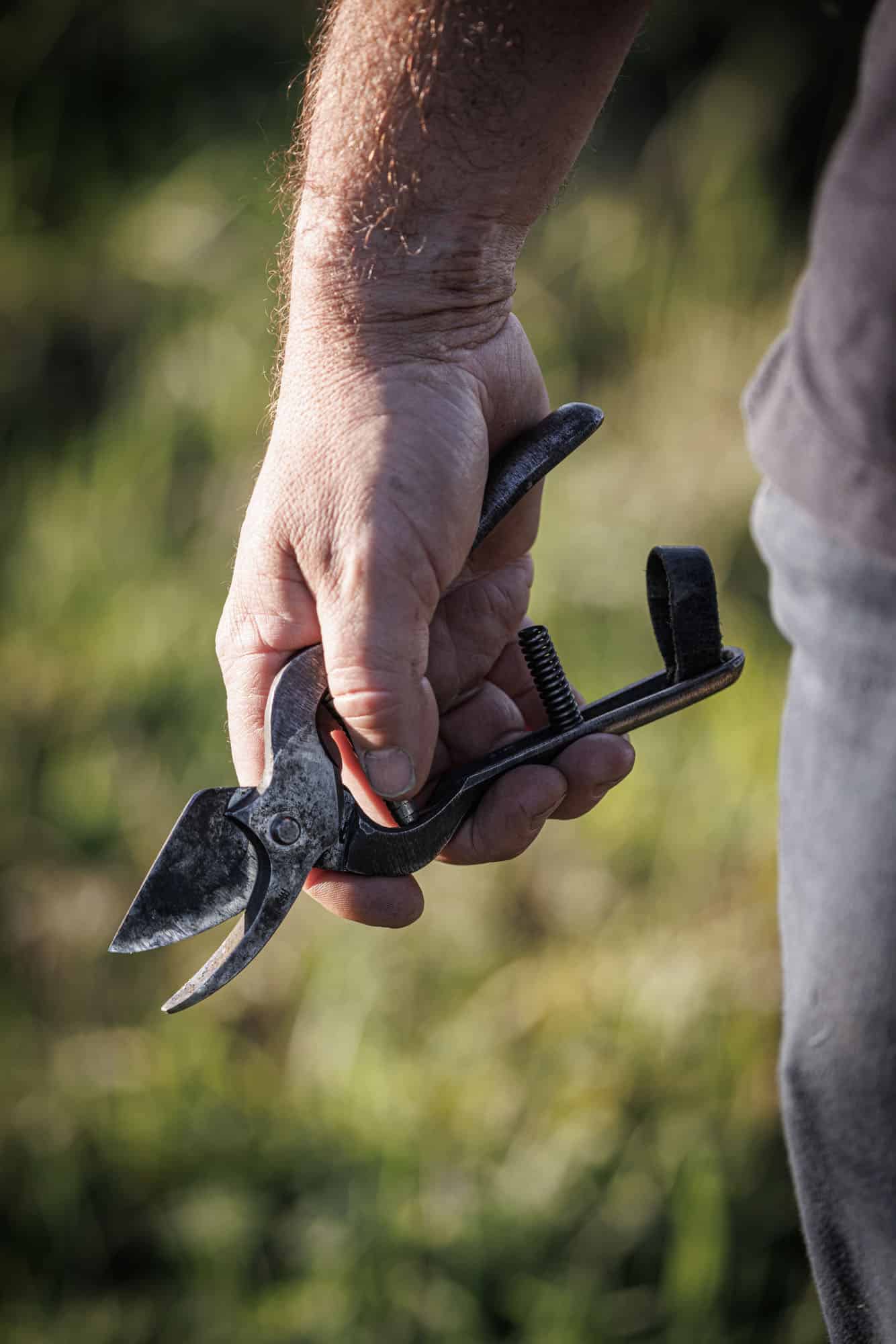
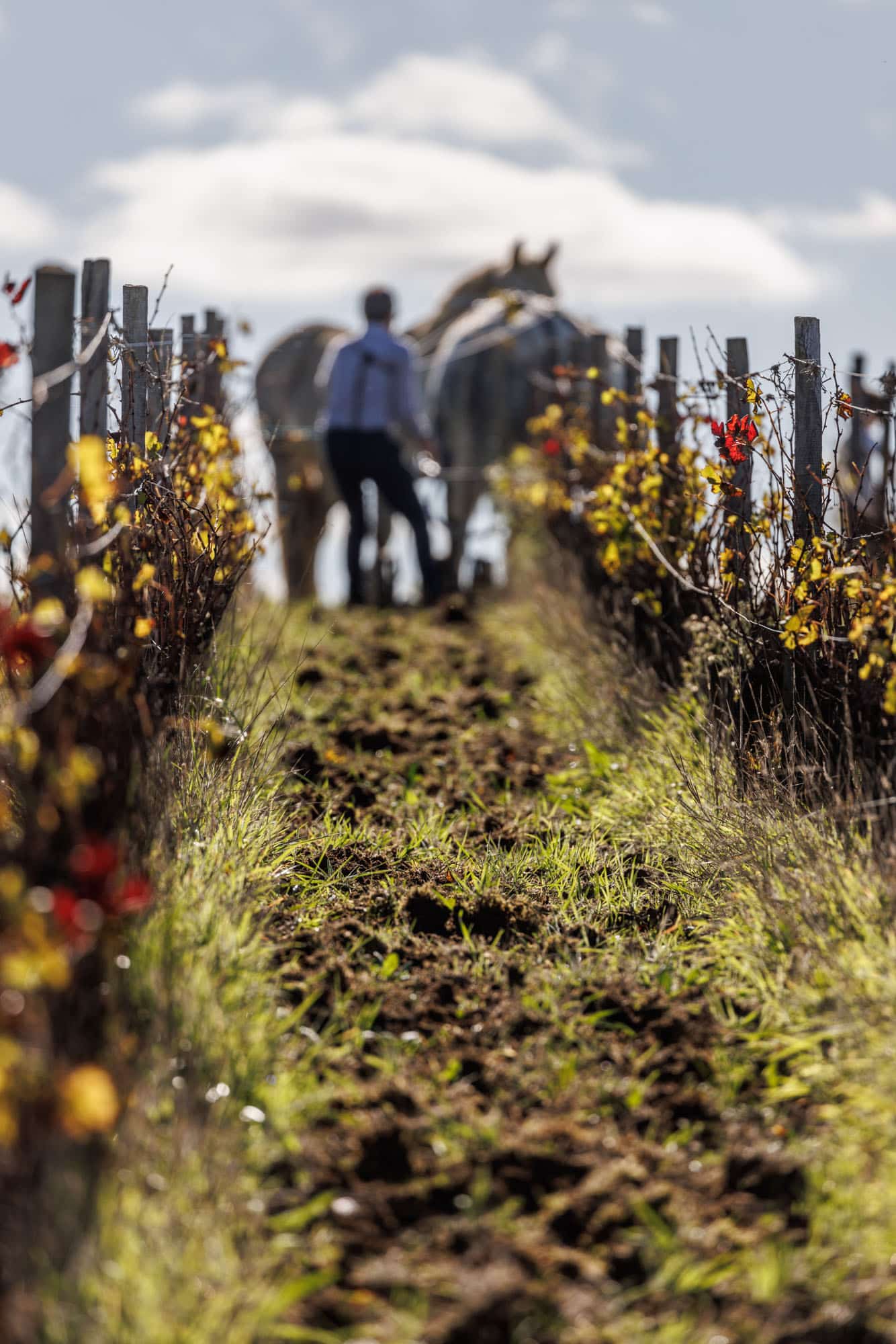
- Working the soil with draft horses, precise manual harvesting, and interventions in tune with the rhythms of nature.
- Constant experimentation to minimize inputs, enrich soil life, and produce wines without artifice.
- Reflection on every impact: installation of nesting boxes, management of the water cycle via constructed ponds, maintenance and diversification of hedges.
Our agroecological approach respects and enriches the natural complexity of our terroir and helps to make our estate a harmonious and sustainable ecosystem.
Wines that reflect their terroir:
sincere, lively, full of character
Our ambition is to rehabilitate underrated forgotten terroirs of the Côtes de Bourg through sincere, precise, and lively wines that reflect the richness and potential of our region. Each bottle we produce conveys this unique identity, the result of attentive listening to the terroir and patient work.
We extend this commitment to a selective distribution of our wines, working with dedicated wine merchants, rigorous export partners, and restaurants renowned for their sense of taste, origin, and craftsmanship. Each partnership is conceived as an encounter, a shared story, consistent with our values and philosophy, where our bottles find their place among connoisseurs who will share and recount our identity.